Mario & Sonic at the Olympic Games Tokyo 2020 – Review
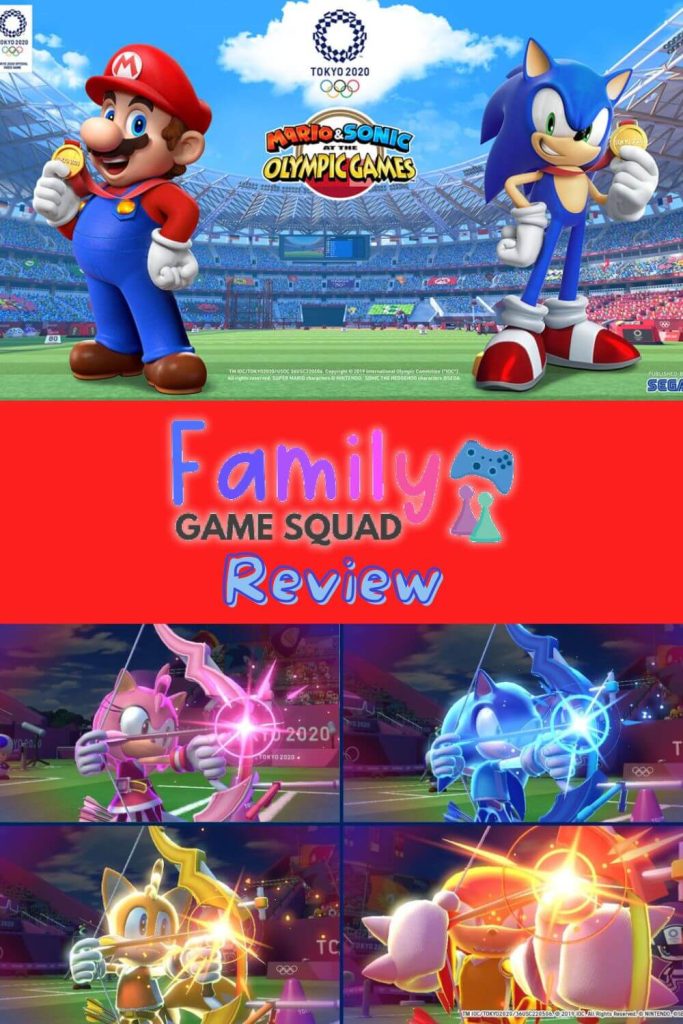
Mario & Sonic at the Olympic Games Tokyo 2020 is among our favorites in our collection of over 80 Nintendo Switch Games. In this game, you play as Sonic, Mario and all their friends as they play Events based on the Olympic Games set in Tokyo 2020 and ones based on Tokyo 1964. It’s a lot of fun and in my review you’ll find out more!
Why Mario & Sonic at the Olympic Games Tokyo 2020?
Mario & Sonic at the Olympic Games Tokyo 2020 on the Nintendo Switch is a vibrant and content-packed crossover that celebrates both the Olympic spirit and the long-running rivalry between Mario and Sonic the Hedgehog. As one of the more modern entries in the series, it blends traditional sports gameplay with creative twists, retro-inspired visuals, and a surprising amount of variety.
At its core, the game is a collection of Olympic events, including staples like the 100m dash, swimming, and hurdles, alongside newer additions like skateboarding, surfing, and sport climbing. Each event is designed to be easy to pick up but challenging to master, often relying on timing, rhythm, or quick reactions. The Nintendo Switch’s versatility plays a big role here—players can use button controls, motion controls with Joy-Cons, or even touchscreen inputs in handheld mode.
One of the standout features of this entry is the Story Mode, which is more ambitious than in previous games. The plot involves Mario, Sonic, and their friends being transported into a retro-style video game set during the 1964 Tokyo Olympics. This clever setup allows the game to switch between modern 3D events and charming 2D pixel-art competitions. The retro segments are especially enjoyable, offering a nostalgic throwback feel while still delivering solid gameplay. It’s a creative idea that adds depth and variety, helping the game feel more like a complete experience rather than just a collection of mini-games.
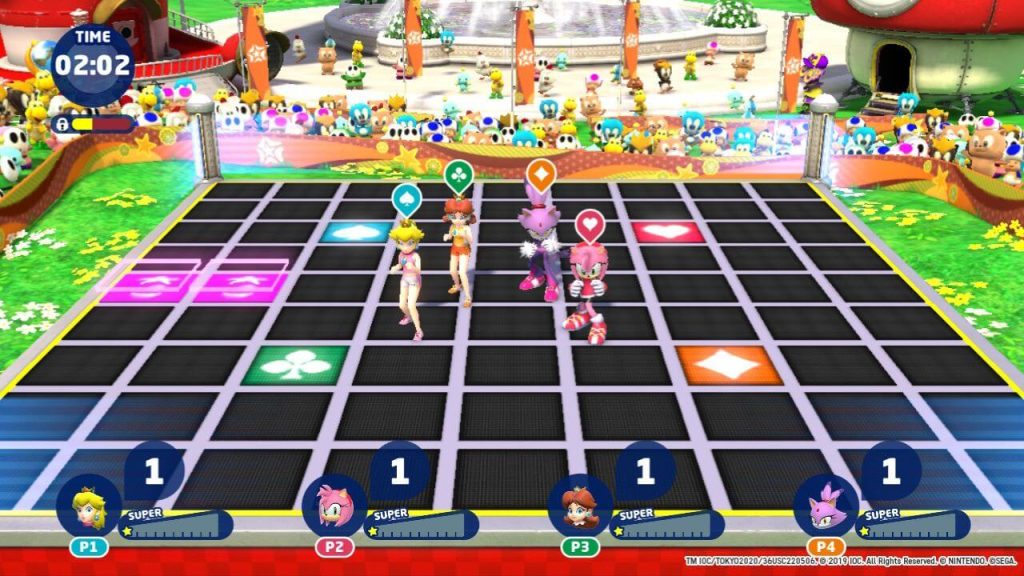
The roster of characters is another strong point. Players can choose from a wide selection of familiar faces from both franchises, including heroes, villains, and supporting characters. Each character has their own strengths, which can give them an advantage in certain events. While this adds a bit of strategy, it doesn’t overwhelm the game’s casual nature.
Multiplayer is where Tokyo 2020 really shines. Whether you’re playing locally with friends or competing online, the game captures that classic party-game energy. Quick rounds and simple rules make it easy for anyone to jump in, regardless of skill level. Motion controls, in particular, can be a lot of fun in a group setting, even if they’re not always the most precise option.
That said, the game isn’t without its flaws. While there are many events, not all of them feel equally polished. Some are genuinely fun and replayable, while others feel shallow or overly dependent on button mashing. This inconsistency can make the experience feel uneven over time.
Another issue is replay value for solo players. While the Story Mode is enjoyable, it’s relatively short, and once you’ve completed it and tried all the events, there isn’t a strong sense of progression to keep you coming back. The game is clearly designed with multiplayer in mind, so those playing alone may find it loses its appeal more quickly.
Visually, the game is bright and colorful, with lively animations and detailed environments inspired by Tokyo. The mix of modern graphics and retro pixel art gives it a unique identity within the series. The soundtrack is energetic and fitting, though it may not leave a lasting impression.
How We Test Games
For testing games we use a Nintendo Switch firmware version 2H. Hardware includes Joy-con and Pro controller on a large screen TV. Tests are done with up to 5 players. We take turns playing and evaluating games.
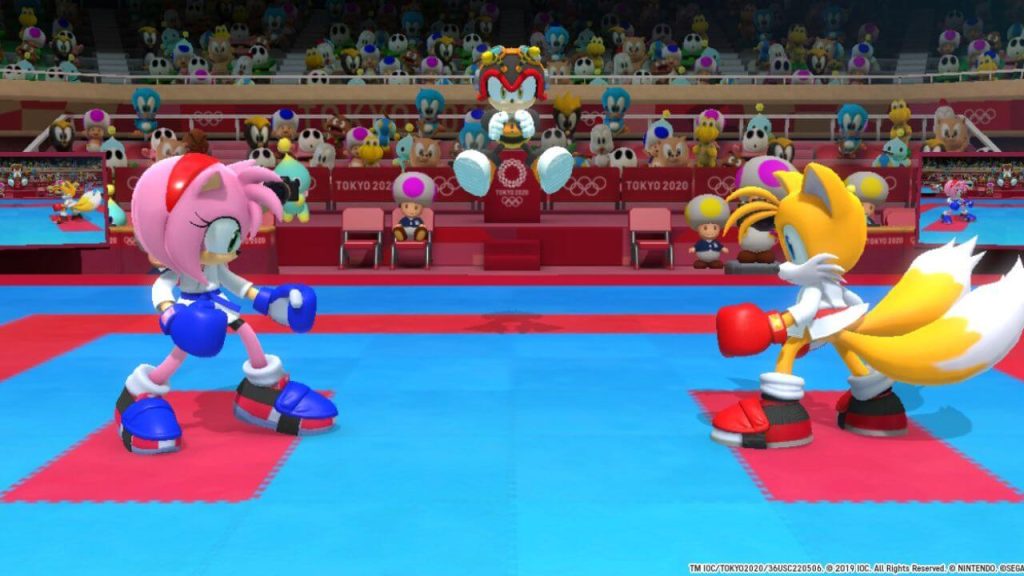
Whenever possible we play multiple players. We also use a Nintendo 2DS, DS XL, and for PC games we use a Ryzen 7 1700x CPU, AMD RX580, running on Win 10. This game is up to 4-players in most events except Karate, Boxing and all the 2D events those mentioned are only 2-players and for both 4-player and 2-player events are done on one Nintendo Switch.
Pros
- Wide variety of Olympic events, including modern additions
- Creative and enjoyable Story Mode with retro 2D segments
- Fun multiplayer experience, both local and online
- Large roster of beloved characters
- Multiple control options (buttons, motion, touchscreen)
Cons
- Inconsistent quality between events
- Some mini-games feel shallow or repetitive
- Limited long-term replay value for solo players
- Motion controls can be imprecise at times
Summary
Overall, Mario & Sonic at the Olympic Games Tokyo 2020 is a fun and energetic party game that’s best enjoyed with friends and family. Its creative Story Mode and mix of modern and retro gameplay help it stand out, while the variety of events keeps things interesting—at least for a while. Although it doesn’t offer the deepest gameplay or the longest-lasting solo experience, it succeeds in delivering a lighthearted and accessible sports game that captures the spirit of both franchises. If you’re looking for a colorful multiplayer game with quick, competitive fun, this entry is a strong choice.
If you enjoy Mario & Sonic like we do, try checking out my post about Mario & Sonic London Olympic Games (3DS Version)!

Mario & Sonic at the Olympic Games Tokyo 2020 – Review brought to you by Gaming Chickadee
Chickadee loves to have family gaming days. She loves birds, unicorns, ponies She also likes the Nancy Drew Games. She loves to play as Princess Daisy in the Super Mario Games, Her favorite games change a lot but right they are: Mario Party Superstars, Super Mario Bros. Wonder and Pretty Princess Party.